
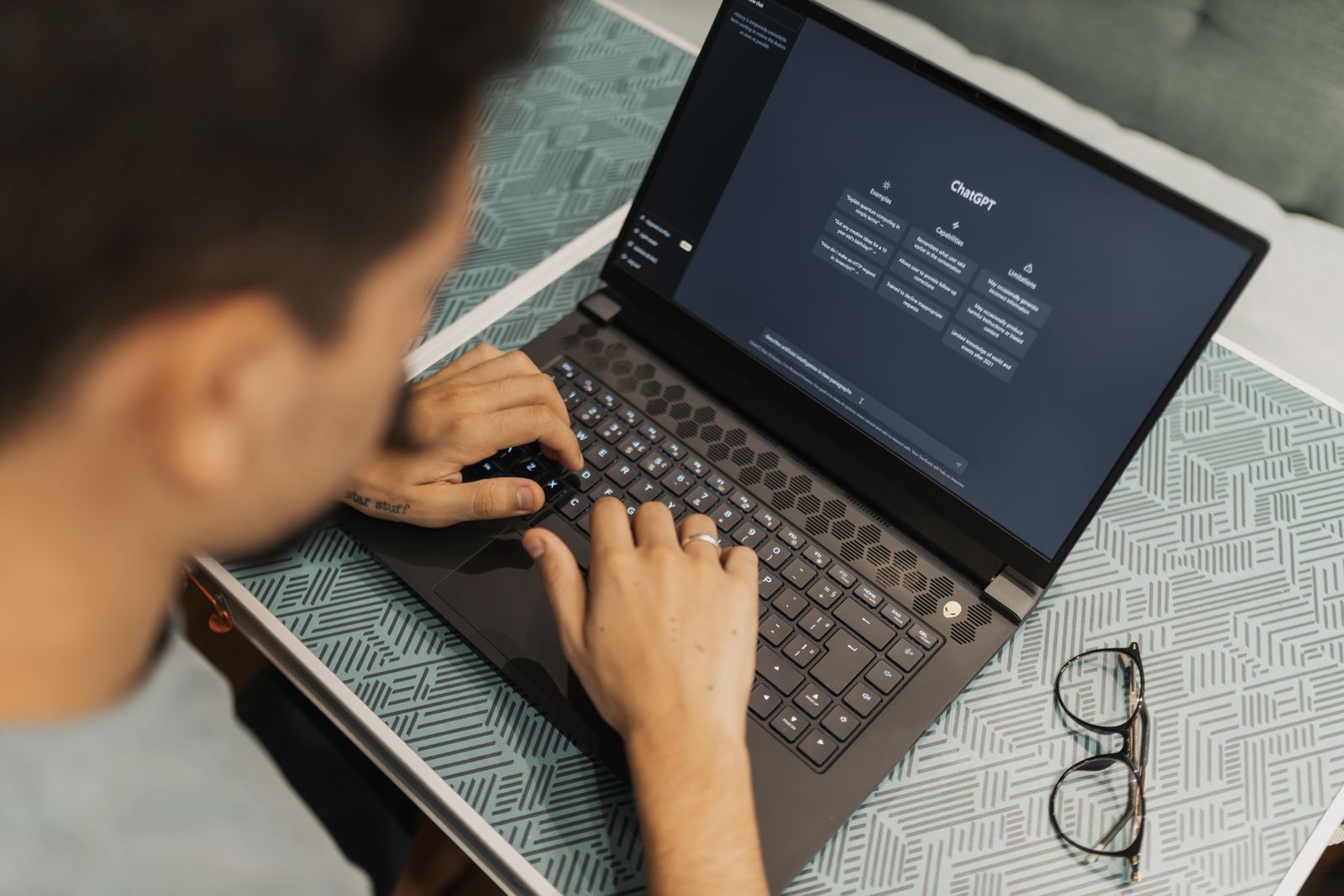
Why assume?
- Suppose you are not good enough with AI
- Suppose an AI agent can do parts of your job faster and better
- Assume that a person working with AI will do 100 times as much as you can do today
What do you do then?
Be the one to lead AI.
Be the one to use it.
Become the one who raises the level.
I hear it more and more often: AI is going to take the jobs of knowledge workers.
Young people will struggle to get entry level positions.
When one person can do the work of three, two become redundant.
It sounds logical. Karl Marx talked about the machines will take over the jobs so we have to fight back.
But that is not what history or research shows happens with major paradigm shifts in technology.
In 2026, the Harvard Business Review published a study of a workplace with around 200 employees who started using AI in their everyday work. The result was not that people worked less. The opposite happened. Those who adopted AI worked more, took on more responsibility and delivered more than their colleagues who did not use the tools. The productivity gap widened rapidly.
This is the core of what is happening now. It is not that the work disappears. What is happening is that the difference between those who use the technology and those who do not is becoming clearer.
History shows us this time and time again.
When the vacuum cleaner became common in the home, the time spent on cleaning did not drop dramatically. The standard for what was a "clean home" increased. We started vacuuming more often. Expectations shifted.
When the washing machine arrived, work did not disappear. It freed up time which made it possible for more women to go into paid work. It increased the total value creation in society and contributed to more equality. The nature of the work changed, but the need for people did not disappear.
When Excel arrived, we didn't need fewer economists. We started to create more complex analyses. When the internet came, marketers didn't disappear. They had to learn new tools and compete at a higher level.
Technology rarely diminishes ambition. It increases them.
Yes, AI will take over many of the tasks we currently spend time on. Yes, certain roles will disappear. For some, this will be demanding.
But as long as there are problems to solve, there is work. Humans are, as the physicist David Deutsch describes us, problem-solving beings. When we solve one type of problem, we move on to the next. We raise the standard, we build more, we expect more.
What is changing now is not the need for knowledge workers. These are the advantages in the labor market.
We are moving towards a more dual working life. Those who learn to use AI effectively will become far more productive and take on greater responsibility. Those who do not will find it more difficult to show value in the same roles.
AI can solve specific tasks. It can write, analyze and structure. But it cannot define what is the right problem to solve, or take overall responsibility for the result. It cannot think end to end in the same way as a human who understands context, culture and consequences.
You are more than the tasks you perform. You are the person who sets the direction and uses the tools.
This is particularly relevant for HR managers
For HR managers, this is particularly relevant. This is not primarily about downsizing. It's about skill shifting. The employees who learn AI now will grow faster, take up more space and contribute more. The labor market has always rewarded those who adapt first.
AI does not make knowledge work less important. It makes it more challenging, and more fun!
The job of HR in the future will not only be to use AI tools. But also to ensure that the business you work in manages to get as many employees as possible to use AI, attract employees who are best at using AI and ensure that AI is not used incorrectly.
Are you the one in the team who is most curious about AI and wants to drive the shift forward? If so, you will be in demand in the job market for years to come!
The question is not whether jobs are disappearing. The question is who will take the step and become among those who grow the fastest.
Would you like to see how we use AI in Preppio to simplify onboarding, sickness absence follow-up and other HR processes with AI?



 Microsoft Teams