
STEP 1: Set your goals before designing your employee onboarding process
Short-term tactical goals
- Get the basics right before day one (paperwork, laptop ready, email, etc)
- Save time on repetitive tasks for HR
- Reduce the number of failed hires
- Reduce unwanted turnover
- Reduce time-to-productivity for new hires
Long-term strategic goals
- Improve employer branding and become a more attractive place to work
- Create a sense of community across the organization
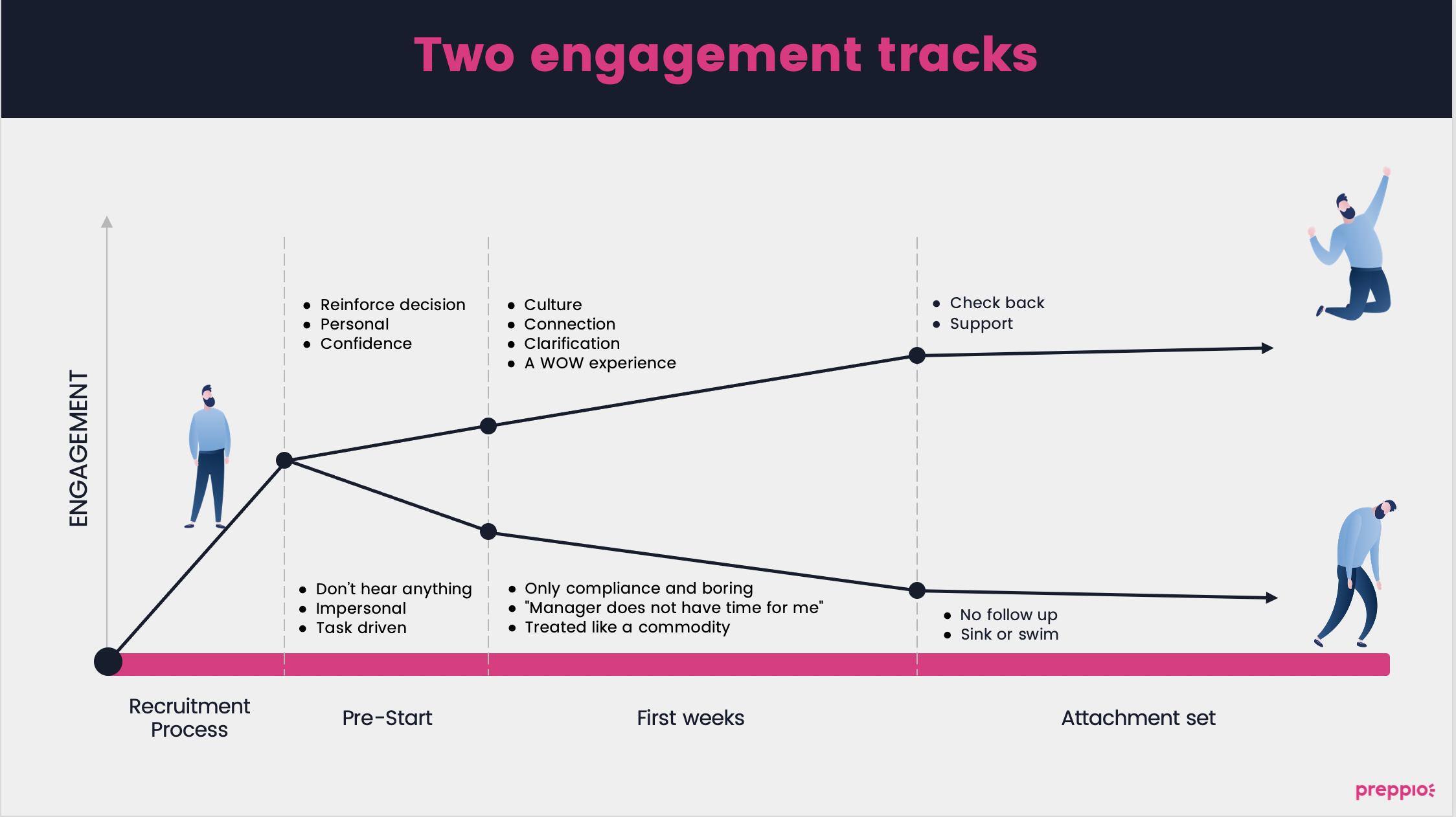
- Increase employee engagement
- Develop cohesion: one company, one culture
Free Cost Calculator
- The average cost of onboarding a new hire is 30% to 70% of their annual salary
- Recruiting and training are major costs, but time to productivity carries the highest overall cost
- Companies can save up thousands of dollars per new hire hired by maximizing the onboarding success
STEP 2: Conduct interviews using guided questions
Interviews are often missed, and we recommend conducting onboarding interviews with employees and managers to identify improvements. Exit interviews with employees departing within 120 days are extremely helpful to understand what went wrong.
STEP 3: Top 10 Insights for Building Interview Questions
Lack of Consistency
"There is no consistency in our onboarding process. Things don't get done or don't get done the right way." Experiences vary by manager, season, department, and location.
Manager Limitations
"Managers do not have the time, or the skills needed to give their hires a good onboarding experience." Approaches range from nurturing to sink-or-swim.
No Measurement of Success
"You do not measure onboarding success. This is a common problem, and most companies have no clue why some employees succeed, and others fail."
HR Follow-up Gaps
"HR does not have time to follow up on each new employee over prolonged periods of time, and managers are busy." Risk of employees feeling lost, particularly in larger organizations.
Loss of Personal Touch
"You do not make people feel special, seen, or valued. When hiring a lot of people companies lose the personal touch." Buddy/mentor programs are suggested as solutions.
Recruiter Overselling
"The recruiters oversell the positions." Data shows that 61% of new hires do not think their new job lives up to their expectations and feel cheated.
Information Paradox
"Information overload as well as not having the information you need." New hires face excessive communication while lacking critical details.
Larger Organization Challenges
"It is daunting to start in larger organizations. It is not uncommon that employees do not know where to go to find help." Employees hesitate asking questions about sensitive topics.
Tasks Slip Through Cracks
"Things just slip through the cracks. Equipment and software are often not organized for the first day at work."
Outdated Processes
"Time spent on simple, repetitive, and mundane tasks. Some companies are still running their business as they did 20 years ago or using outdated clunky software."
STEP 4: Book time with an expert
Schedule a complimentary 15-minute consultation with Preppio onboarding experts for tailored advice.
Ready to Design Your Onboarding Process?
Preppio's onboarding experts have helped dozens of organizations design and implement world-class onboarding programs. Let's talk about yours.





 Microsoft Teams